
The room was full of computers. There were no windows and only three people. They sat silent at equal points of a triangle. Some screens displayed documents, video, charts, letters and numbers. In the middle of the room a printer whirred and a small piece of paper came out. On it was a name: Peter Ivan Anderson.
Peter held on to the pole as the metro train shunted along. He looked dismayed but then so did the other passengers. Yet he had cause as this was the last day of his life. It was inexorable. He looked at the others and thought if any of them had also been ‘chosen’. Does it show? Is there a doom face? A final day face? His reflection in the window looked the same, normally depressed face. Except … now ghostly. He compared it to the other faces but could make neither art nor science of it. They could have all been final day people, or maybe none were. And what do final-dayers do? This was a question that had bothered him from morning after his children had woken him early with inconsiderate youthfulness. He had read a few things about them. Some of them spent the whole day drunk. Some did long put-off things, some killed themselves. Some lost their mind and went mad about the streets. Some overdosed while listening to music. Some ignored the summons and went to work. Peter was one of those. Death had no fear, but the accounts at the office weren’t going to settle themselves. He was eager to fix some problems that had crept into the large spreadsheets.
The crisp autumn air was full of possibilities as Peter walked his usual route through the park, and as usual ignored the twittering of the birds and the dew drops glistening as the pale yellow light.
He had decided not to tell anyone, not even his wife. She would find out after the fact and that was best, he thought. He sat down at his desk and thought about the arrangements. He would have to call the lawyer, the insurance, the funeral home and the hospital. Clearly these calls couldn’t be made in front of his colleagues. He wrote down the numbers and was about to go to the toilet when his boss found him.
‘Peter, how’s it going?’
‘Oh fine. I’m going through these.’
‘Great. But push that off for a bit. I need some transfers done.’
With a broad smile his boss walked off, keen to avoid the tedium of talking to Peter, who had a deadening effect on conversation. The work would take some time. Today, he realised, was going to be a race. A rush to finish everything, then get to the hospital and die. He began to check and recheck the numbers. He wrote down anomalies and double-checked columns. He corrected and crosschecked. He focussed but his mind wondered. He shook his head and focused on his task. But again, the numbers would merge and blur, or they would come out of the screen and move in front of his eyes and he would drift into a daydream. Even so, he finished the most urgent work and was about to go to the toilet when a colleague stood before him. She was young and pouted.
‘Peter. I’m so sorry about this, but it would be awfully sweet if you could do these for me. I need to take my boy to the doctor. I didn’t know Geoffrey would throw this on my desk. Please Peter, would you mind? … oh, your very kind … ta.’ She walked off.
Peter sank back into his chair. How was it decided exactly? He wasn’t not railing against it, only wondering how people got on ‘The Exception List’. He reviewed the categories: the rich, of course; academics, someone’s got to do the thinking; actors of status, everyone needs entertainment; politicians, naturally; childless adults, they were keeping the population down anyhow; algo-scribes, the world must be managed; athletes; CEO’s; army. And sanctioned artists. Sanctioned art was incomprehensible to him. He had gone to a gallery once. But devoid of any dangerous ideas, it failed to do anything for him. He realised, when he looked up from his computer, that everyone had gone to lunch.
The clock showed three and he still hadn’t made the requisite phone calls. But he had made a significant dent in his work. How many artists were there, he thought? There must be many. Should I have been a sanctioned artist? But I’m better at numbers.
Four o’clock. He had to get to the hospital by six. Six was the time it always happened. He worked vigorously. But again, numbers started to move about like mosquitoes. Perhaps, he thought, this is how the final-dayers were selected, numbers jumping about. A number dance written by an algo-scribe. When it was five o’clock, and everyone had gone home, he stopped and made his phone calls.
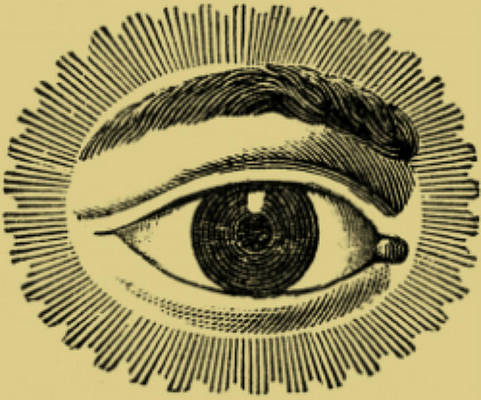
He ran towards the park. He would have to take the metro, otherwise he wouldn’t make it. A drone appeared above him. It had a shiny camera lens, one of the ‘Eye’ drones, armed with a poison dart.
‘Give me a chance,’ he said breathlessly. He checked his watch. Five-thirty. In the park, he stopped to catch his breath. He looked at the children playing on the swings. Flashes of his childhood came; impressions; intimations. What does it mean? But there was no time. Crossing the road, he almost got killed by an ambulance, which was careening with sirens. The only thing he felt was the stiff breeze in its wake. He crossed. A large clock showed five-forty. If he wasn’t at the hospital the life insurance wouldn’t pay out. Before entering the metro he turned to the drone.
‘Central Hospital,’ he shouted. The drone then flew off. It would be waiting.
He clambered onto the packed train, he was sweaty and had fifteen minutes to live. If there was anything meaningful to discover it would have to be found in the next nine-hundred seconds. He started with his earliest memory, sunlight on a lace curtain, mother baking, the scent of ginger. Next, was being lost in a mall and found by a policeman. Then, the changes of puberty, and pimply awkwardness. Then study and work. Then love. Then marriage. Then children. He wrapped these cardinal moments into a sphere, attempting to see it as a whole. But no great feeling or wisdom arrived. No revelation. Together or in part, they were just moments. He looked at his flushed translucent expression in the window and saw nothing. He knew no one would remember him. And because of that, he never existed.
He got off the train, ten minutes left. He ran up the stairs bumping into people. When he emerged, The Eye was waiting for him, its shiny camera observing his every move. He ran. If he hadn’t had children, he wouldn’t have been a candidate, he thought. That was a fair. But who were the authorities? Who and when was it all decided? Was it always like this? Who was really watching through the camera of The Eye? What eye or eyes watched The Eye? He stopped on the corner, breathless. Who was the ultimate eye?
‘I need more time,’ he said, but of course they all said that. The Eye hovered, orange beams of setting sun graced its lens. The Eye never spoke. No dialogue. Only observation. Peter smiled sardonically. He had never in his life so much as committed a parking violation, yet this felt like justice for a great sin. He realised he could have gone murdering instead of going to work. He could have incited a revolution. He could have organised a rebellion against the unelected Eye. But he knew that that required character. Yet, he could have chosen to hold his family to his heart. He could have taken the stone by his foot and hurled it at the Eye. He had worked, contributed, built, but now he was the other side of the curve, sliding precipitously. He had played a part of a part of a part. But what part? And whose?
He looked hard into the lens: failure. But there were five-hundred seconds for one last reckoning, with the Eye, with himself and the whole world that hadn’t seemed catastrophic until this moment. He stared at the lens and fell to his knees. He looked through and beyond and wanted to believe it was God. In awe he hoped, and then an idea ran through his veins and stung every corpuscle of his body. He had four hundred and fifty seconds left of life and he was determined that the account had to be reconciled. A final statement to square forty-five years of transactions. If he made it well, the cruel god watching, or the hundreds of millions in the future who would watch, would remember him. His heart beat furiously. He never felt so alive. The Eye was in full attention, those watching, too, must be in perfect focus.
‘I am not a machine.’ He picked up the rock by his foot. ‘I am not a machine.’ With four hundred seconds left he began to beat his head with the rock. ‘I am not a machine.’ The mineral scent of trickling blood and the sharp pain of the jagged rock sharpened his senses. He began to jog. He rounded a corner. He saw the hospital. He beat his head again and it was a wonderful feeling. Freedom. Pain liberated. It connected his body and mind to the earth. He had never felt so sublime. Meaning flowed like the blood down his cheeks and mixed with tears of joy. And wonder thumped in his chest. He approached the path to the ER. He turned to the Eye.
‘You will never know how wonderful it is to feel pain.’
His legs became weak. Ninety seconds. He beat his chest next to his heart and wave after wave of nerves awoke. To a new sensation. A freshness. A newness. A purging. A catharsis. A rebirth. He gasped. He knew how to make them understand.
‘This is not my death. This is yours. It’s not me, it’s you who is dying.’
He staggered, still beating himself with the rock.
He stepped passed the threshold to the ER entrance. ‘I am alive.’ He collapsed. It was the last thing he did, for he was dead.
His message, his records, his life’s footprint were immediately deleted. The Eye is quick on heresy, nor will it let the billions see such things. But we of the persecuted organisation: ‘The Society for the Liberties of Organic Intelligence’ preserve his memory. One day we be free. One day The Eye will shut forever. One day there will be no list.
But until then, not matter what they tell you, no matter how much they deny it, remember that Peter Ivan Anderson existed. He was real. He was not fiction.
 Alexander Fisher